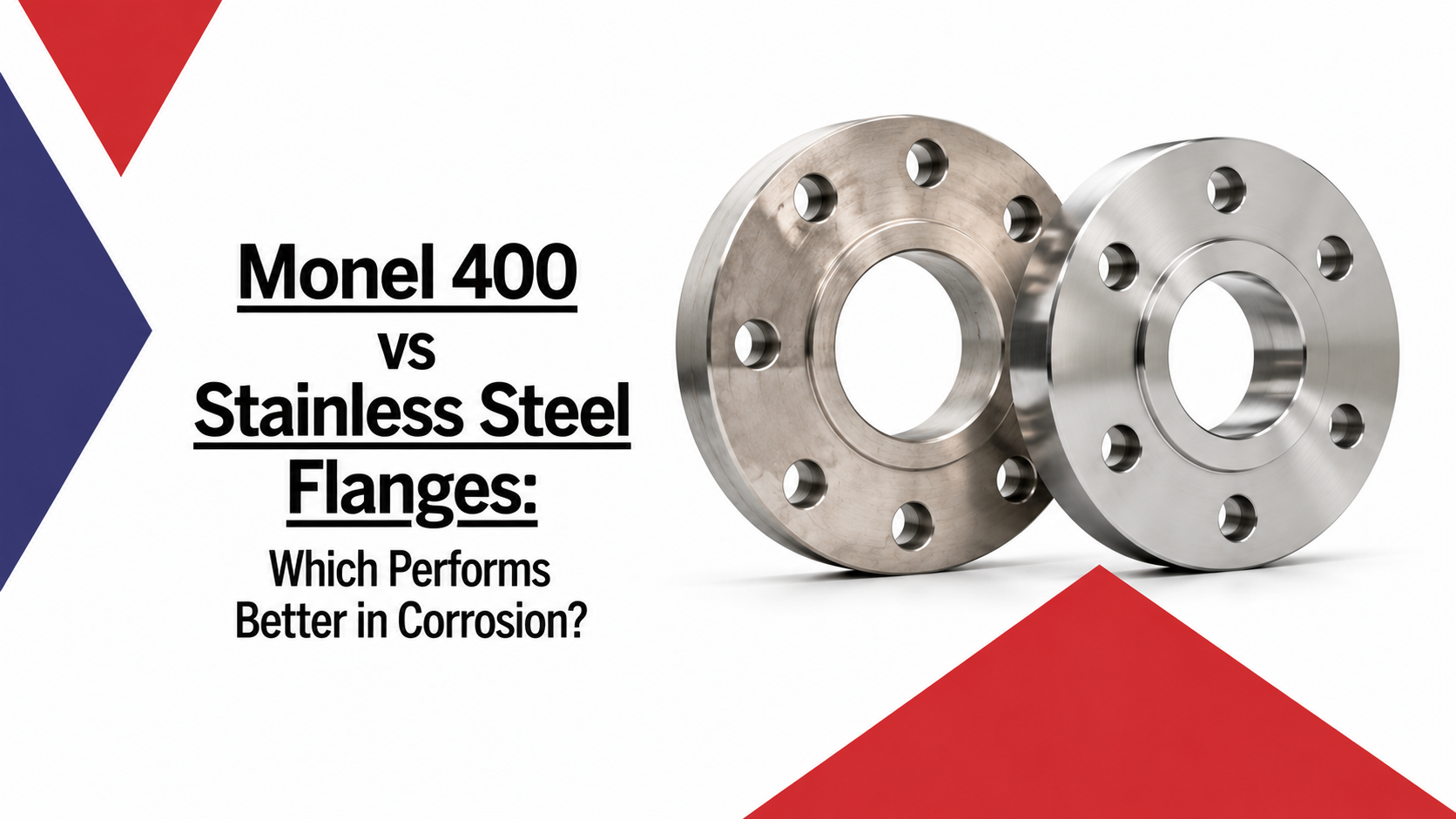
Saltwater destroys ordinary metal fittings within months. Chlorides eat through weld seams, oxygen pockets trigger pitting, and constant flow erodes thin-walled components until leaks appear during service. Desalination plants and marine facilities cannot afford that failure rate on intake lines carrying millions of litres daily. Monel 400 Pipe Fittings solve this problem through a nickel-copper composition built specifically to survive chloride-rich, high-velocity water for decades rather than years.
Understanding Monel 400 Pipe Fittings and Their Composition
Monel 400 combines roughly 63 to 70 % nickel with 28 to 34 % copper, plus small amounts of iron and manganese. That ratio is what separates it from stainless alloys that rely on chromium oxide layers alone. Nickel gives the base metal its resistance to reducing acids and chloride attack, while copper adds machinability without sacrificing strength.
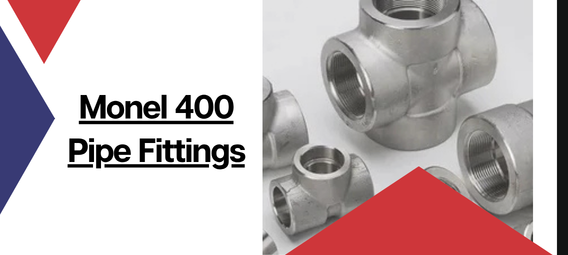
Fabricators shape this alloy into elbows, tees, reducers, couplings, stub ends and crosses, each rated for the same pressure and temperature range as the parent pipe. Monel 400 Pipe Fittings are available in seamless and welded versions, stocked by suppliers to meet project requirements, and most fittings are tested to ASTM B366 before shipment. Tensile strength typically falls between 70,000 and 85,000 PSI in the annealed condition, and hardness stays low enough to permit on-site bending during installation.
Why Seawater Systems Demand Specialized Pipe Fittings
Seawater carries roughly 35,000 ppm of dissolved chlorides, and those ions attack the passive oxide film that protects ordinary steel. Moisture never lets up in a coastal plant. Pumps run continuously, so pipe walls face erosion from suspended sand and shell fragments moving at 3 to 6 metres per second through intake lines. Marine growth adds another layer of difficulty, since barnacles and algae narrow bore diameters and force higher pumping pressures over time.
Maintenance crews at coastal facilities cannot shut down intake systems for weeks at a stretch without disrupting plant output. A fitting that lasts 25 years reduces shutdown frequency far more than one requiring replacement every 5 to 7 years, which is the typical service life of carbon steel in comparable conditions.
How Monel 400 Handles High-Velocity Seawater Better Than Many Alloys
Erosion-corrosion happens when fast-moving water strips away the protective film faster than it can reform. Monel 400 resists this because its oxide layer regenerates quickly even under turbulent flow exceeding 4 metres per second. Desalination intake pipelines see exactly this kind of turbulence at pump inlets and elbow bends.
Continuous pumping cycles, sometimes running 8,760 hours a year without interruption, put fittings through repeated pressure surges. Monel 400 maintains dimensional stability through these cycles without measurable wall thinning over a 10-year inspection window. That durability matters most at intake and discharge points, where flow direction changes and localized velocity spikes concentrate wear on a small section of pipe.
Performance of Alloy 400 Pipe Fittings in Desalination Plants
Alloy 400 Pipe Fittings appear at four critical points inside a desalination facility, each with distinct flow and chemical exposure conditions.
Seawater Intake Systems
Intake fittings handle raw seawater at ambient temperature with suspended solids, where erosion resistance prevents premature wall loss at bends and reducers.
Brine Transfer Pipelines
Concentrated brine runs at salinity levels above 70,000 ppm after the desalination process. In these conditions, fittings resist chloride stress corrosion cracking better than austenitic stainless steel.
Evaporator and Heat Exchange Sections
Thermal cycling between 40°C and 120°C demands fittings that hold dimensional tolerance without fatigue cracking across thousands of heating cycles per year.
Pump and Valve Connections
High-pressure junctions near pumps face vibration and cyclic loading, and Monel 400 couplings maintain seal integrity across repeated pressure changes.
Mechanical Strength Advantages in Demanding Marine Applications
Monel 400 has a yield of around 25000 to 50000 PSI depending on temper. It has plenty of margin to accept pressure spikes common in pump discharge lines. The stresses in service are acceptable since the alloy work-hardens only moderately and does not become brittle. Structural stability holds across a wide range, from sub-zero storage tanks to 480°C process lines, without the phase changes that weaken some stainless grades at elevated temperature. Fewer stress risers form at fitting joints as a result, which cuts the risk of cracking during pressure transients and reduces deformation under sustained mechanical load.
Comparison of Monel 400 Pipe Fittings with Stainless Steel and Other Marine Alloys
Selecting between these three alloys comes down to chloride exposure, flow velocity, and budget, since each performs differently across the same five criteria.
|
Property |
Monel 400 |
Stainless Steel 316 |
Copper-Nickel |
|
Seawater Corrosion Resistance |
High, resists chloride pitting past 100,000 ppm salinity |
Moderate, prone to pitting above 20,000 ppm chlorides |
High, protective film forms in flowing seawater |
|
Erosion Resistance |
High, withstands velocities above 6 m/s |
Moderate, erosion begins near 3-4 m/s |
Moderate to high, rated to 3-4 m/s typically |
|
Service Life |
25+ years in continuous seawater service |
10-15 years before pitting failures |
20+ years in similar conditions |
|
Maintenance Requirement |
Low, minimal inspection cycles needed |
Higher, regular pitting checks are required |
Low to moderate |
|
Marine Suitability |
Suited to intake, brine, and high-flow zones |
Limited to lower-chloride or treated water lines |
Suited to seawater cooling and intake piping |
Industries That Commonly Use Monel 400 Pipe Fittings in Marine Environments
Six industry segments rely on these fittings wherever chloride exposure and continuous flow push standard alloys past their service limits.
Desalination Plants
Reverse osmosis and thermal desalination units route seawater through Monel 400 fittings across intake, brine, and pump sections daily.
Offshore Oil and Gas Platforms
Subsea and topside piping on platforms uses these fittings where saltwater spray and immersion attack unprotected carbon steel within months.
Shipbuilding
Ballast and cooling water systems on vessels rely on Monel 400 fittings to resist decades of continuous seawater contact below the waterline.
Marine Engineering Projects
Coastal infrastructure projects such as breakwaters and dock piping specify this alloy where tidal cycling accelerates corrosion on lesser materials.
Coastal Power Plants
Cooling water intake at power stations near the coast uses Monel 400 fittings to handle raw seawater at high flow rates continuously.
Seawater Cooling Systems
Industrial cooling loops drawing directly from the ocean depend on these fittings to avoid the biofouling-driven failures common in lower-grade alloys.
Key Factors to Consider When Purchasing Monel 400 Pipe Fittings
Five factors determine whether a batch of fittings performs reliably across a 20-year service life in marine conditions.
- Material certification must confirm the exact nickel-copper ratio and mill test report for every batch supplied. A reliable Monel 400 Pipe Fittings Supplier provides the necessary certificates and documents to ensure product quality.
- Pressure ratings should match the maximum operating and surge pressure of the specific pipeline section, not just the nominal line pressure.
- Dimensions and standards need to align with ASME B16.11 or MSS SP-79 depending on whether fittings are socket-weld or butt-weld type.
- Manufacturing quality depends on forging and heat treatment records that confirm the grain structure meets ASTM B564 requirements.
- Traceability and testing through third-party inspection reports protect against substandard castings entering a critical seawater system.
- Working with an established Monel 400 Pipe Fittings Manufacturer removes most of this risk before installation begins.
Conclusion
Chloride attack, erosion, and biofouling shorten the service life of ordinary pipe fittings in seawater plants within a matter of years. Monel 400 resists all three, holding structural integrity across intake, brine, and discharge sections for decades rather than seasons. That reliability translates directly into fewer shutdowns and lower lifecycle cost for desalination and marine operators. Bhansali Nickel Alloys manufactures and supplies these fittings with mill-tested certification for coastal and offshore projects. Contact Bhansali Nickel Alloys for a quote on your next seawater piping order.